 News
Hammer of The Last Two says bread paid what music would not. His ₵6,000 a day is his own arithmetic
On Konnected Minds Podcast, the producer also said Ghana's arts have no regulator. A 2020 law created one, but QMS could not find a public record of it regulating music.
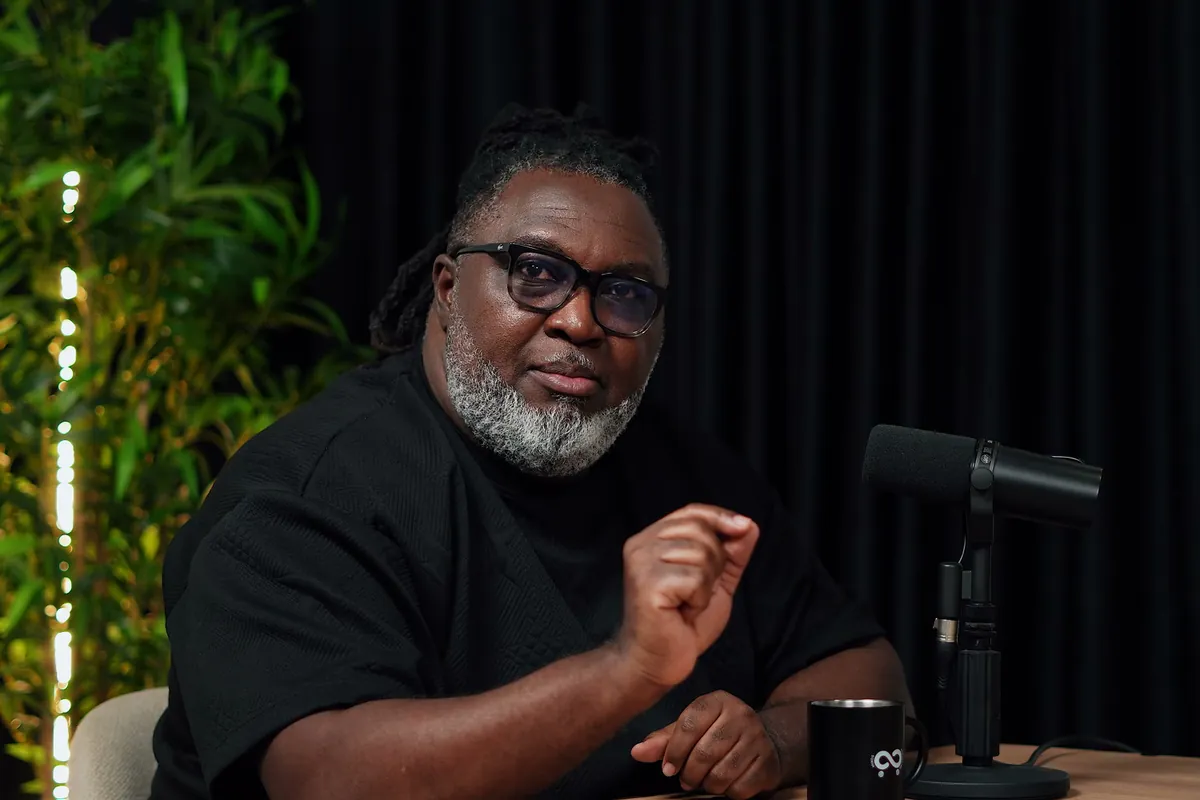
The music producer Hammer of The Last Two, born Edward Nana Poku Osei, has said it was bread and not music that made his money. "Music didn't get me there. It was bread that got me there," he told host Derrick Abaitey on Konnected Minds Podcast in an interview posted in November 2026.
The podcast's title says he built his house from selling bread. In the interview he pushed back on that wording, saying "it's not like I built a house from selling bread", while repeating that bread "got me there".
Hammer also made claims about royalties, regulation and pensions in Ghana's music business. QMS checked them against the public record. Some hold, one is half true, and two could not be confirmed.
One paid beat
Hammer said the only time he was paid for a beat was $2,000, and that the money was an advance towards his publishing. That is his own account.
He said he took no fee for Obrafour's first album, Pae Mu Ka, released in November 1999, on which he is credited as a producer. Credits vary between sole and team production. The no-fee account matches what he has said publicly before.
He said his father, a banker at Ghana Commercial Bank, doubted music because it "didn't have an industry".
GHAMRO's defence and the money
Hammer called the Ghana Music Rights Organisation (GHAMRO) "ineffective" and said it lacked a proper system to oversee music revenue. That is his opinion.
GHAMRO has answered this kind of criticism. In December 2025 it said more than 90% of broadcast stations either do not pay or fail to submit accurate usage reports, so it cannot legally distribute for that use. It also said incomplete reports from digital platforms reduce payouts, and that it handles only the publishing share, not masters. In 2021 it said it had contracted a monitoring firm, Global Music Monitoring, which covered 300 radio stations over five months. Another monitoring company, Qisimah, disputed GHAMRO's account of why it lost out.
In July 2026, GHAMRO announced what the Ghana News Agency described as its highest-ever digital royalties. The whole round, from 27 July, came to ₵1,433,571.43: ₵500,000 in background music, ₵706,149.55 in digital mechanical, ₵160,641.88 in digital performance and ₵66,780 in live royalties. The agency's report, the single source for this breakdown, attributed a highest individual payment of ₵121,000 to unnamed sources. It did not say how many members were paid.
"No regulator" is half true
"All these things are happening because there is no regulator," Hammer said. On the Musicians Union of Ghana (MUSIGA), he said membership is not compulsory. MUSIGA's own communications director said the same in 2021: "It is a voluntary association; we give advice."
On paper, however, a regulator exists. The Creative Arts Industry Act, 2020 (Act 1048) established the Creative Arts Agency. The published copy of the Act gives assent as 29 December 2020, under President Akufo-Addo's NPP government; a UNESCO record gives 26 December. The Agency's governing board was inaugurated in August 2025 by the Minister for Tourism, Culture and Creative Arts, Abla Dzifa Gomashie, under President Mahama's NDC government, more than four and a half years later.
QMS could not find a public record of the Agency regulating music. The websites of the Agency and the ministry could not be opened during this check, and only the first section of the Act could be read, so this describes what could be found and does not prove that no such work exists.
The embassy claim
Hammer also said dishonesty runs through the business, among "artists, producers, industry personnel", and among businessmen who want "a quick buck". He said some people invite musicians to shows they know will not happen, and that the musician ends up with a damaged record at the embassy. He named no one, and he called the practice racketeering, which is his own description.
QMS could not find a public record of a documented Ghanaian case with every part of that claim, so it remains Hammer's account.
Pensions
The 85.4% figure Hammer discussed comes from one study of 123 musicians in Ghana, by Eyram Dzitrie, published in the journal Labor History in 2024. The questionnaire ran from April 2022 to March 2023, mostly in Accra, Kumasi and Tamale, and the author calls the results "largely indicative". In it, 85.4% said they did not contribute to a registered pension scheme.
Hammer said musicians do not have the money. In the study, the most common reason among those not enrolled was being undecided (46%), followed by financial difficulty (31%). Of those not enrolled, 84% planned to join a scheme.
The bread numbers
A1 Bread's founder, Godfred Obeng Boateng, began the business in Kumasi. Hammer said he kept urging him to bring it to Accra and went on to head sales and marketing.
In 2018, Mr Boateng told Starr FM that A1 was selling 30,000 loaves a day at Kejetia in Kumasi and about 30,000 in Accra, at ₵5 a loaf, Pulse Ghana reported, citing no independent verification. That is the only public source QMS found for the volume.
Hammer said he earned a commission of 10 pesewas a loaf on top of his salary and benefits, and that this was "like 6,000 a day". QMS could not confirm the commission.
The ₵6,000 is Hammer's own arithmetic, applied to the founder's combined Kumasi and Accra figure. Hammer's job was the Accra expansion, and whether his commission covered Kumasi is not known. If it covered only Accra's 30,000 loaves, his share would be half: ₵3,000 a day. At the 2018 average exchange rate, ₵6,000 was about $1,309 and ₵3,000 about $654. These are peak daily figures and are not a statement of his income.
In 2018 Starr FM reported him saying that selling A1 bread was making him more than he made in music. His exit from A1 was reported in November 2023. In the interview he said he asked for his resignation and that music is now his full-time work.
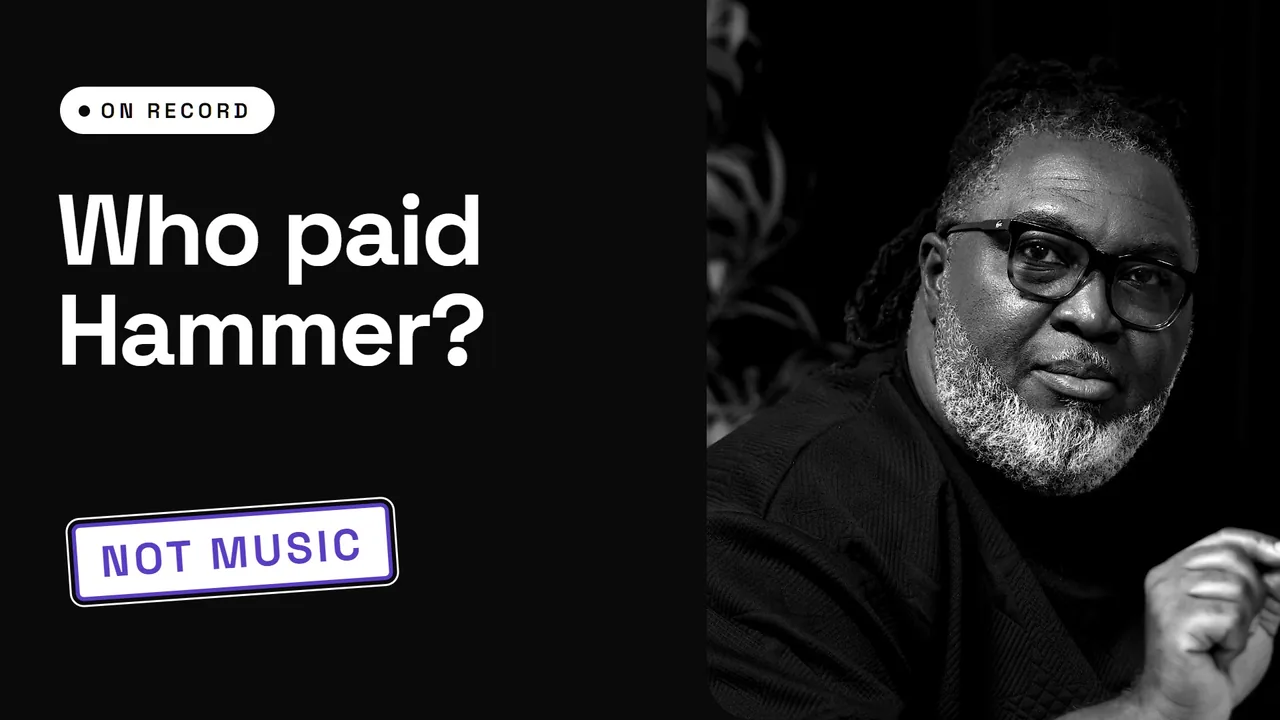
The ON RECORD episode Define Selling Bread sets his words against these records.
Everybody else in that studio still needs the next feature, the next show, the next favour. Hammer has bread money. The day a musician in Ghana can talk like this while living on music alone, that day we can say we have an industry.
- Konnected Minds Podcast: Derrick Abaitey's interview with Hammer of The Last Two (Nov 2026)
- Ghana News Agency: GHAMRO to pay highest-ever digital royalties (20 Jul 2026)
- MyJoyOnline: GHAMRO explains ₵123.82 royalty payment to Fancy Gadam (17 Dec 2025)
- Citi Newsroom: Qisimah disputes GHAMRO's account of music monitoring (Sep 2021)
- Creative Arts Industry Act, 2020 (Act 1048), section 1
- UNESCO: record of the Creative Arts Industry Bill
- Ghana News Agency: Tourism Minister and the Creative Arts Agency board (Aug 2025)
- Ministry of Tourism, Culture and Creative Arts: inauguration of the Agency's governing board
- MyJoyOnline: MUSIGA has no authority to regulate or sanction award schemes, Daddy Bosco (9 Sep 2021)
- Eyram Dzitrie, Labor History: Economic insecurity and pension participation in Ghana's music sector (2024)
- Pulse Ghana: how many loaves A1 Bread sells daily (10 Sep 2018)
- Pan African Visions: profile of A1 Bread founder Godfred Obeng Boateng (Oct 2020)
- World Bank: official exchange rate, Ghana, 2018 average
- Starr FM: Hammer on making more from bread than music (May 2018)
- GhanaMusic: Hammer announces departure from A1 Bread (21 Nov 2023)
Every factual line in this story is checked against at least two independent sources, unless the text says it comes from one report.