 News
From Zinabu to a ₵20m fund: how Ghana's movie money dried up
The video boom that began in 1987 ran on discs sold in markets and traffic. One by one, the ways producers got paid have closed, and the new ones barely pay.
In 1987, with celluloid film too expensive and the state film studio unable to fund new work, William Akuffo released Zinabu, a feature shot on a video camera. It is generally credited as Ghana's first video feature. Two video films followed in 1988, seven in 1991 and more than fifty in 1993.
For roughly the next two decades, the money in Ghanaian film came mainly from selling tapes and then discs, in markets such as Kejetia in Kumasi, on the street and in traffic.
The state studio
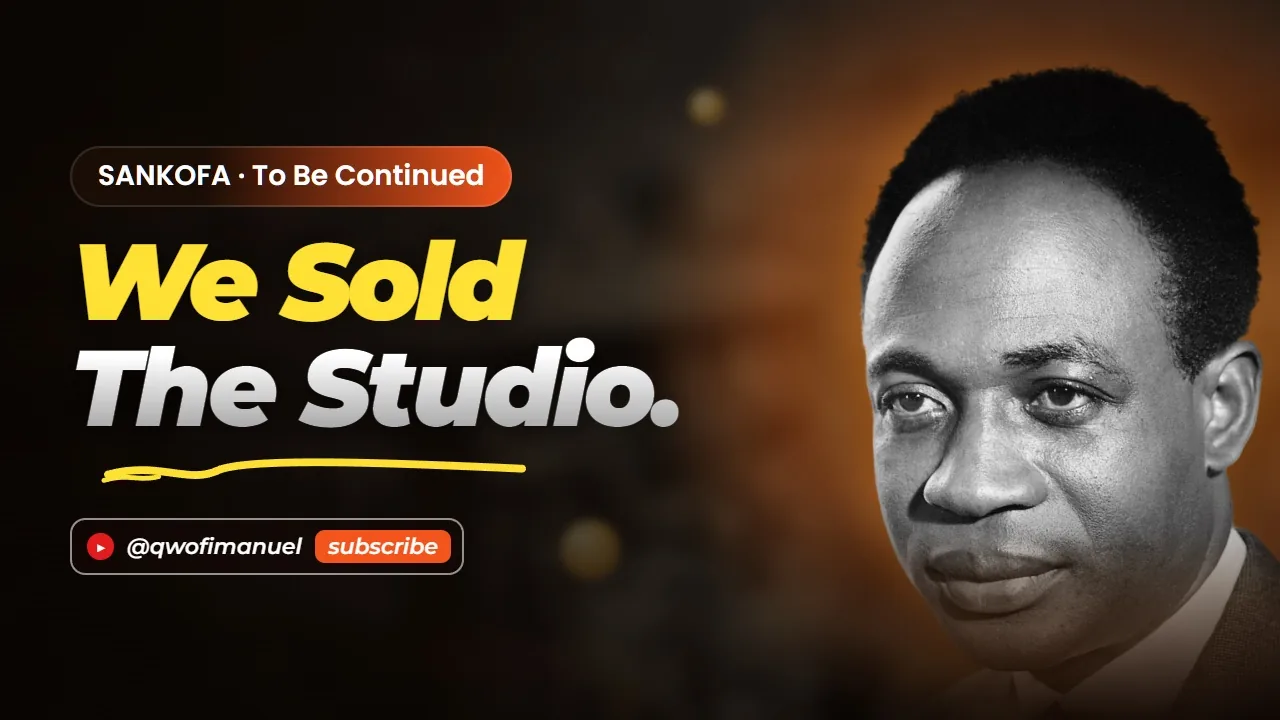
Kwame Nkrumah's government set up the Ghana Film Industry Corporation at Kanda, Accra, in 1964, with a studio and cinemas. In 1996 the government sold 70% of it to a Malaysian television company, and it was renamed Gama Media. The premises later housed TV3. Director Kwaw Ansah called the sale "another heavy blow" for the industry and has said much of the corporation's footage has gone to waste.
Television, piracy and dumsor
Producers say they gave their films to TV stations free in exchange for airtime: part one on TV, then buy the disc for the rest. Producer Socrate Safo told Graphic Showbiz in 2021 that the stations later found their own ways to get films, and producers were "relegated to the background". From 1 July 2021, producers', distributors' and crew associations barred their members from selling feature films to Ghanaian TV stations.
Piracy cut into disc sales, and actor Akrobeto has said that of all the causes of Kumawood's decline, none compared to dumsor, because buyers had no power at home to watch.
The new doors
A 2025 study based on interviews with 50 Ghanaian filmmakers found only a very small minority had distributed a film on Netflix, and that YouTube was hard to earn from. The Film Development Fund created by the 2016 Film Act received ₵20 million in 2026, and the National Film Authority opened applications in July.
In July this year, after complaints from Nigerian producers, the National Film Authority threatened to revoke the licences of Ghanaian TV stations airing Nollywood films taken from YouTube.
The talent never left and the stories never left. We gave the films to TV for airtime, let the pirates sell them and sold the studio. The industry is waiting on part two, and somebody has to pay for it.
- Wikipedia: Zinabu (released 1 Oct 1987; 2 video films in 1988, 7 in 1991, over 50 in 1993)
- Wikipedia: Cinema of Ghana (GFIC at Kanda, 1964; 70% sold in 1996; GFIC later housed TV3)
- SA History Online: Ghallywood, the evolution of Ghana's film industry
- AfricanFilmNY: Ghanaian Film Industry, Past and Present (Kwaw Ansah, Jun 2026)
- MyJoyOnline: Who killed the Ghana film industry? (29 Oct 2013)
- Graphic Showbiz: Showing movies for free on TV was a mistake, Socrate Safo (16 Feb 2021)
- Starr FM: producers ban sale of feature films to TV from 1 July 2021 (16 May 2021)
- MyJoyOnline: Dumsor collapsed Kumawood movie industry, Akrobeto (15 Nov 2020)
- The Conversation: Ghana's films don't often make it to Netflix (4 Sep 2025)
- Pulse Ghana: NFA opens applications for the GH¢20 million Film Development Fund (29 Jul 2026)
- Development and Classification of Film Act, 2016 (Act 935)
- ThisDay: Ghana moves against TV piracy of Nollywood films (18 Jul 2026)
Every factual line in this story is checked against at least two independent sources, unless the text says it comes from one report.