 News
Operation Cold Chop: how Ghana's 1966 coup happened while Nkrumah was in the air
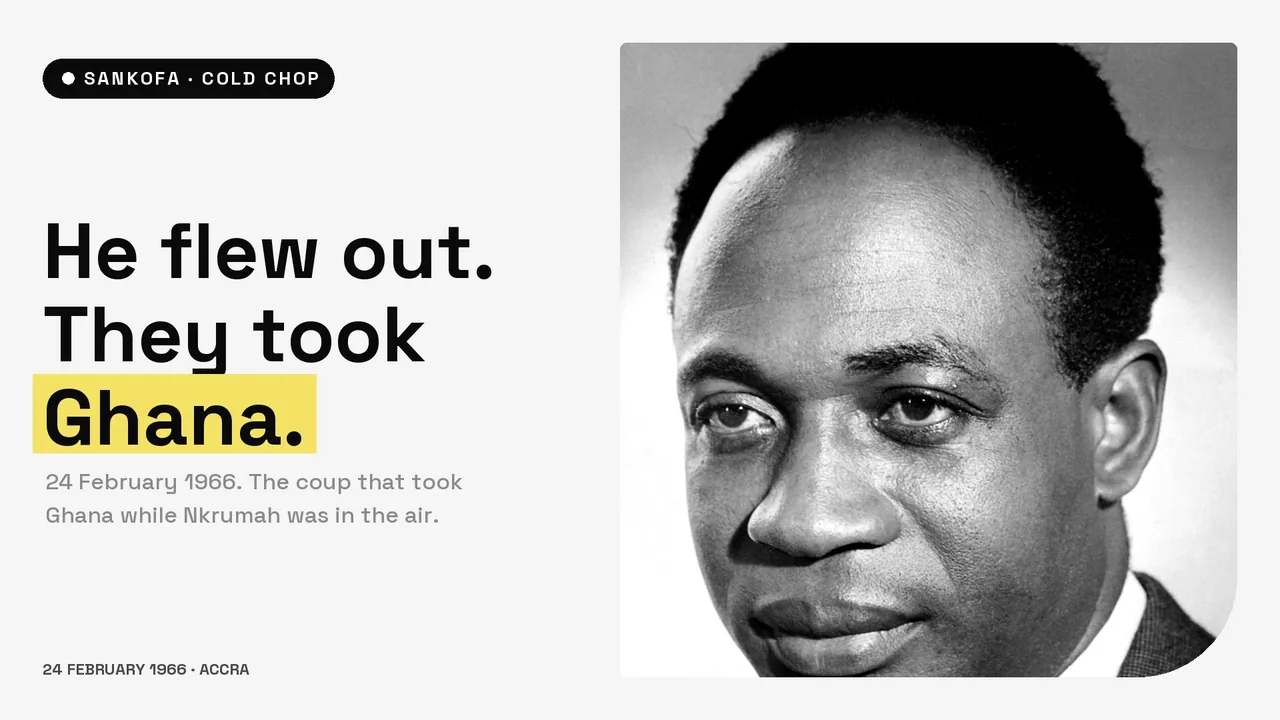
Nkrumah left Accra on 21 February 1966 for a peace mission to Hanoi. Before he landed in Peking, soldiers and police had taken the country, and US files show Washington knew a coup was being planned almost a year earlier.
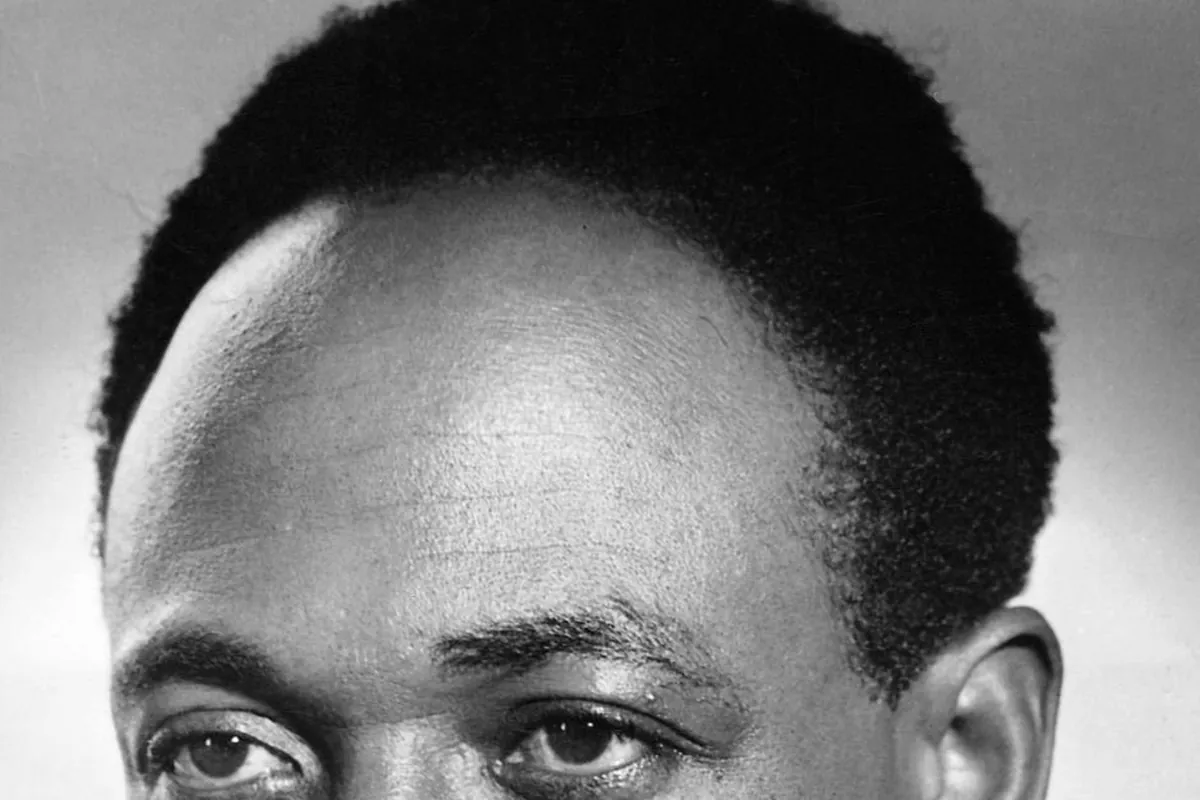
On 23 February 2026, the eve of the coup's sixtieth anniversary, the government renamed Kotoka International Airport as Accra International Airport. The airport had carried the name of Colonel Emmanuel Kwasi Kotoka, one of the leaders of the coup that removed Kwame Nkrumah on 24 February 1966.
A peace mission, and an empty seat
Nkrumah left Accra on 21 February 1966 on a mission to Hanoi to help end the war in Vietnam, flying via Cairo and Rangoon to Peking. In his own account he names his acting police commissioner, John Willie Kofi Harlley, among the officials who saw him off at the airport.
On 23 February troops of the Kumasi-based brigade were ordered south. They were told it was a readiness exercise linked to the crisis in Rhodesia, a cover that Major Akwasi Afrifa later admitted using. The plotters' code name was Operation Cold Chop.
The night of 23–24 February
Before dawn the soldiers moved on Radio Ghana and Flagstaff House, the President's residence and office. The President's Own Guard Regiment resisted for hours before surrendering. The Chief of Defence Staff, Major-General Charles Barwah, refused to surrender and was shot dead at his home.
At about 6 a.m. Colonel Kotoka announced on Radio Ghana that the army and police had taken over. The new National Liberation Council admitted to more than two dozen deaths; Nkrumah later claimed far more. The real figure has never been settled.
News in Peking
Nkrumah landed in Peking as the coup was under way. China's leaders, including Premier Zhou Enlai, met him at the airport already aware of it and broke the news in private. Nkrumah wrote that Zhou told him he still had "another forty years" ahead of him. He died in Bucharest six years later, on 27 April 1972, having never returned to Ghana. Guinea's president, Sékou Touré, made him co-president.
Back home
Crowds came out in Accra and Kumasi. On 25 February Nkrumah's statue in front of Parliament House was pulled down and broken; its head went missing. His Convention People's Party was banned and Parliament dissolved. Hundreds of people held under the Preventive Detention Act were released, while hundreds of CPP officials were taken into custody. In May 1966, 24 February was made a public holiday, Liberation Day.
What Washington knew
Declassified US records show that on 11 March 1965 the US ambassador to Ghana, William Mahoney, told CIA Director John McCone that a coup was being planned by Harlley and Generals Otu and Ankrah, and that "one way or another Nkrumah would be out within a year". On 12 March 1966 White House aide Robert Komer wrote to President Johnson that "the coup in Ghana is another example of a fortuitous windfall" and that the new regime was "almost pathetically pro-Western". The published documents show foreknowledge and approval; they do not show that the United States planned or ran the coup.
What became of the coup makers
Kotoka was killed in the April 1967 counter-coup attempt at the airport later named after him. Afrifa, who led the council in 1969, was executed by the Armed Forces Revolutionary Council on 26 June 1979.
The statue's head resurfaced in 2009, when a woman who had kept it hidden for 43 years handed it back. It now sits beside the headless body at the Kwame Nkrumah Memorial Park, deliberately not reattached.
Whatever you think of Nkrumah, 24 February taught the barracks that the gun works. After 1966 came 1972, 1979 and 1981, and it took Ghana until 1992 to close that door.
- Kwame Nkrumah, Dark Days in Ghana (1968): the trip, the news in Peking, his own account of the night
- US State Department, FRUS 1964–68 vol. XXIV doc. 251 (11 March 1965, Mahoney and the CIA director)
- US State Department, FRUS 1964–68 vol. XXIV doc. 260 (12 March 1966, Komer to President Johnson)
- Graphic Online: The fall of Kwame Nkrumah
- Modern Ghana: The fall of Kwame Nkrumah
- Graphic Online: Govt reverts Kotoka International Airport to Accra International Airport
- GhanaWeb: The severed head of Nkrumah's statue and the woman who kept it for 43 years
Every factual line in this story is checked against at least two independent sources, unless the text says it comes from one report.