 News
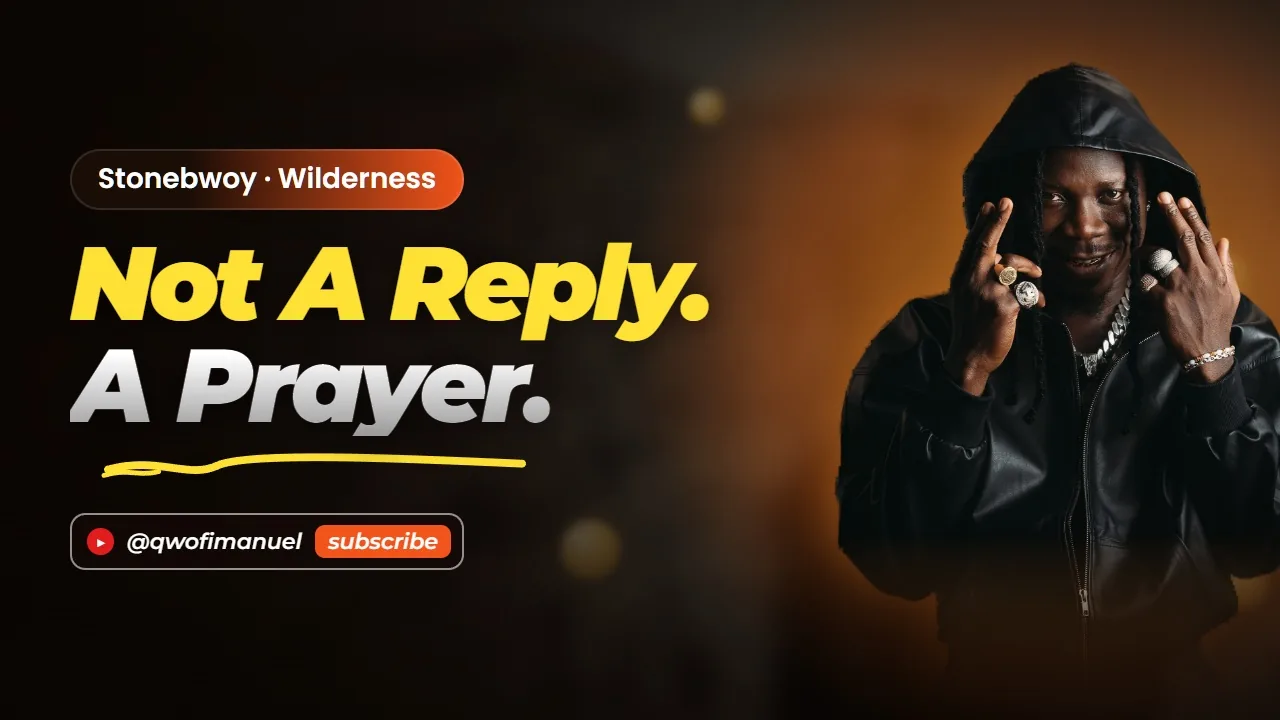
Stonebwoy's "Wilderness" came out four months before the Shatta remarks it was said to answer
The Torcher II song opens with a psalm, borrows from the story of Job and puts Stonebwoy beside Muhammad Ali and Thomas Sankara. It was out in March 2026, long before July's "daddy" row.
Stonebwoy's "Wilderness" is on Torcher II, which arrived on early access on the EVEN platform in mid-March 2026. notJustOk reported a wide release through Def Jam Recordings Africa in May. The visualizer followed on 24 July. Its end credits name Kwaku Kwakye as director, Kerwin Odoom as director of photography, Kofi Kayyy as editor and Richie Offori on visual effects. In it, Stonebwoy climbs a sand hill towards a Ghana flag at the top.
The reply that wasn't
On 27 July 2026, Shatta Wale said in a teaser for The Honest Bunch podcast that Stonebwoy used to call him daddy. The same day, some pages played the "Wilderness" hook as if it were Stonebwoy's answer. The song had been out since March, four months earlier.
A song built on scripture
The first line draws on Psalm 34:19, which says the righteous face many troubles and the Lord delivers them from all of them. So the song tells you how the story ends before it begins. In the hook, Stonebwoy says that no matter how many times he has to go through the wilderness, anyone who wants to get to him has to go to God first.
That line echoes the story of Job, in which Satan needs God's permission before he can touch Job. Elsewhere he tells his haters that his failure would not add to their success.
Later he calls Jah his rock. "The Lord is my rock" comes from Psalm 18, and "JAH" appears as a name of God in Psalm 68 in the King James Bible, which is where Rastafari took the name. A man called Stone, calling God his rock while standing on sand, also brings to mind Jesus' story of the house built on rock and the house built on sand. The song's last line says no man can kill God.
Ali and Sankara
Stonebwoy puts himself beside two men who refused to bow. Muhammad Ali refused to be drafted to fight in Vietnam in April 1967. He lost his title and was kept out of boxing for three and a half years. The US Supreme Court overturned his conviction in 1971. In October 1974 he knocked out George Foreman in Kinshasa and won his title back.
Thomas Sankara took power in Upper Volta in August 1983, aged 33. A year later he renamed the country Burkina Faso, "land of upright people". He was killed in a coup in October 1987, aged 37.
Pages played this hook as a reply to Shatta, but the dates say the song came first. What I hear is a prayer from a man who has stopped counting his troubles and keeps walking up the sand.
- OkayAfrica: Torcher II on early access on EVEN (17 Mar 2026)
- Shazam and Apple Music: "Wilderness" listing (16 Mar 2026)
- notJustOk: Torcher II wide release via Def Jam Recordings Africa (17 May 2026)
- YouTube: official "Wilderness" visualizer and its end credits (24 Jul 2026)
- Yen, Ghana Report, Pulse and ModernGhana: Shatta Wale on The Honest Bunch, "used to call me daddy" (27 Jul 2026)
- The Breakdown on YouTube: "Is Stonebwoy Replying Asumasi On 'Wilderness'?" (27 Jul 2026)
- King James Bible: Psalm 34:19, Psalm 18:2, Psalm 68:4, Job 1:12, Matthew 7:24-27
- Britannica, History.com and Oyez: Muhammad Ali's ban, Supreme Court ruling and the Rumble in the Jungle
- Britannica and BBC: Thomas Sankara and Burkina Faso
Every factual line in this story is checked against at least two independent sources, unless the text says it comes from one report.