 News
Dave's "The Boy Who Played the Harp": a rapper named David puts himself on trial
The title track that closes Dave's third album is one long verse with no hook. He asks what he would have done in 1940, in 1960, on the Titanic and at Karbala, then turns the question on himself: what is he doing in this generation?
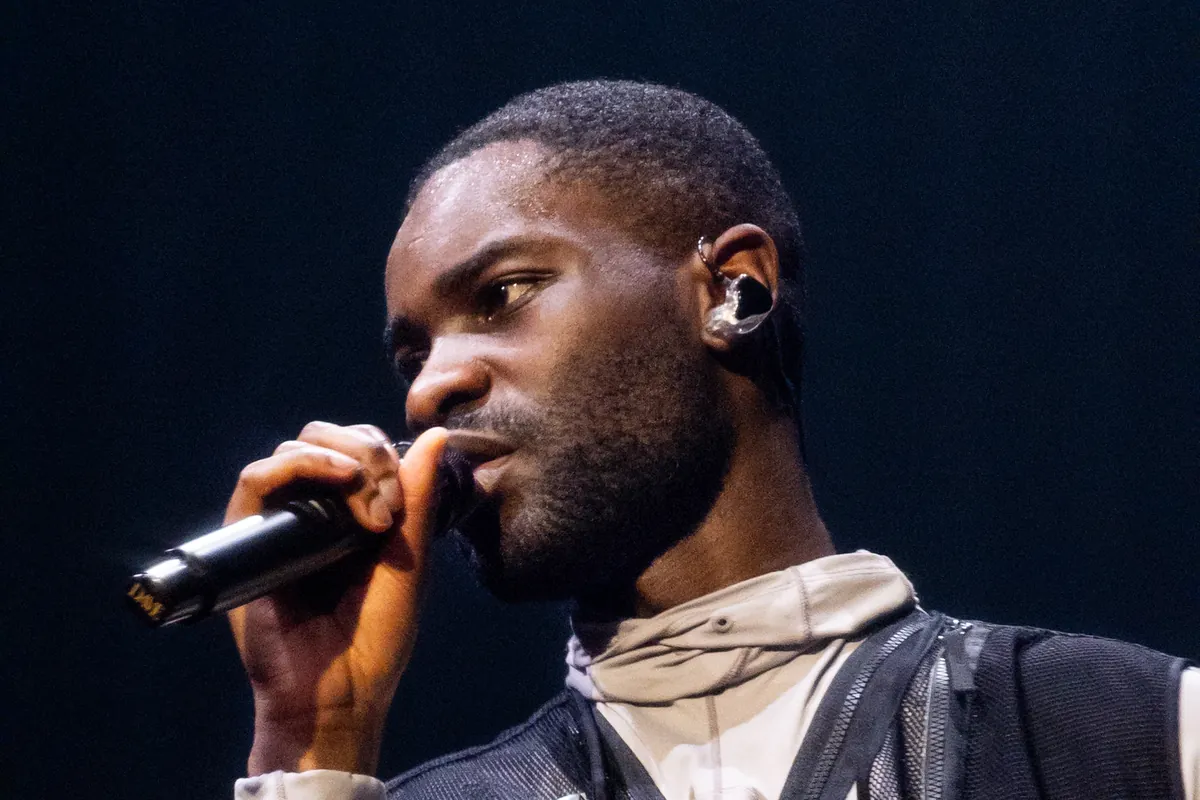
"The Boy Who Played the Harp" is the title track and the closing song, track 10, of Dave's third album, released on 24 October 2025 through Neighbourhood Recordings. The album debuted at No.1 in the UK. The song is produced by Fraser T. Smith, a long-time Dave collaborator, with additional production from Jo Caleb. It is built on a spare piano line and a sample of the Beatles' "And I Love Her", with Lennon-McCartney credited as writers.
The official video, directed by Edem Wornoo for the production company FRIEND, was published on Dave's YouTube channel on 26 February 2026.
The title
The album takes its name from 1 Samuel 16. An evil spirit troubles King Saul, and his servants bring him David, son of Jesse, a shepherd who plays the harp. When David plays, Saul is refreshed. Two chapters later, in 1 Samuel 18, the same king throws a spear at David while he plays. Dave's real name is David Orobosa Omoregie.
The question
The song is one long verse with no hook. Dave keeps asking what he would do in a "next generation": enlisted to fight in 1940, fighting for the rights of his people in 1960, on the Titanic in 1912 when it was women and children first, standing like Husayn at Karbala, locked up like Nelson Mandela. Then he flips it to "this generation", and the answer is less heroic. He admits he is afraid to speak, afraid for his job, afraid of a shadow ban.
Some lines carry two meanings. "Occupation" means his job in one line and kids living under military occupation in the next. He says he puts his pain on vinyl but it is not "movin' the needle", the record needle and the phrase for making change.
The Ghana lines
Three moments touch home. The 1940 line has a Ghana echo: in the Second World War, Gold Coast Regiment battalions fought in Burma, and Accra's army headquarters, Burma Camp, honours that campaign. A rhyme chain runs rumba, Lumumba, Zumba: people dance to Congolese rumba without studying Patrice Lumumba, who spoke at the All-African People's Conference that Kwame Nkrumah hosted in Accra in December 1958, became Congo's first prime minister in June 1960 and was killed on 17 January 1961. And Dave criticises African leaders for selling natural resources to the West "for peanuts". Ghana and Ivory Coast grow about half the world's cocoa, while most of the chocolate money is made elsewhere.
The ancestors
Near the end, Dave says he spoke with his ancestors in the night. They tell him they protested, boycotted and felt powerless too, and still made some change. Their answer is to speak for his people, and to keep the covenant that comes with the name David. The last verse calls back to "In The Fire" with Ghetts and to "Chapter 16" with Kano, from the same album, and ends on the title: "the story of the boy who played the harp."
The bravest thing a big rapper can do is judge himself first, on the record. Dave admits he is scared of the spear, and he keeps playing the harp anyway.
- Wikipedia: The Boy Who Played the Harp (album, track credits, sample, chart debut)
- Songfacts: Dave, "The Boy Who Played the Harp"
- YouTube, Santan Dave: "The Boy Who Played the Harp" (official video, 26 Feb 2026)
- Wikipedia: Dave (rapper)
- BibleGateway: 1 Samuel 16 (KJV)
- BibleGateway: 1 Samuel 18 (KJV)
- Wikipedia: All-African Peoples' Conference, Accra 1958
- Wikipedia: Burma Camp
Every factual line in this story is checked against at least two independent sources, unless the text says it comes from one report.